
Know how AI describes you, and who it names instead.
Your questions are put to ChatGPT, Claude, Gemini and Mistral on every scheduled run. You see your share of the answers, where you rank, how you are described, and which sources the engines relied on.
Eidoscore monitors answers from ChatGPT, Claude, Gemini and Mistral today, with engine and model version recorded on every run. Further engines, including Perplexity, DeepSeek and Kimi, are added as each integration is verified.
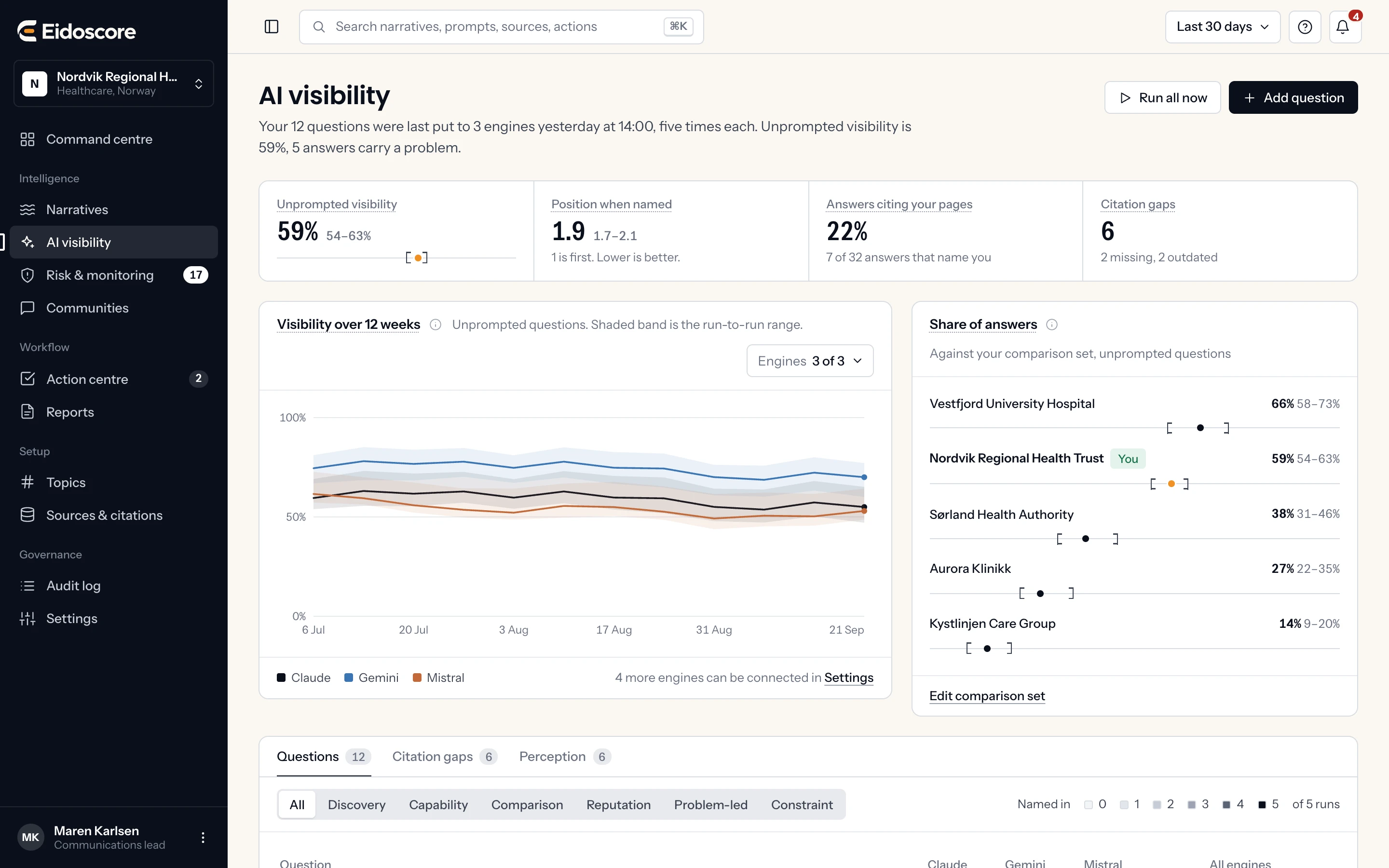
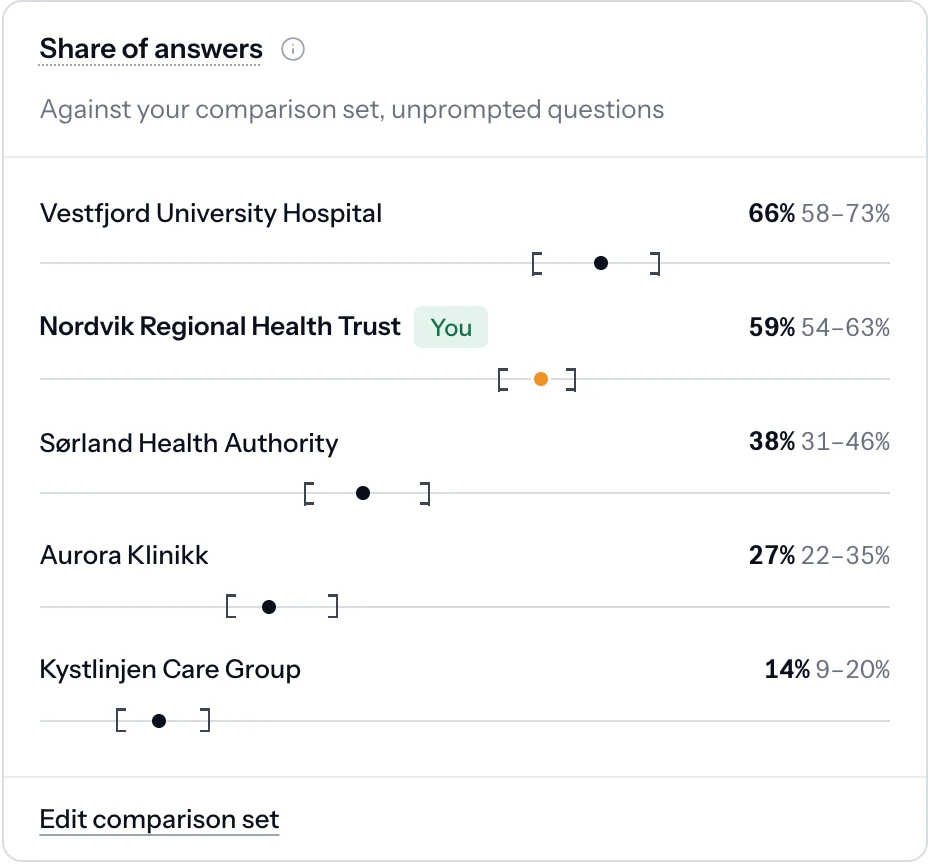
Where you stand against the organisations you are measured against.
For the questions your audiences ask without naming anyone, Eidoscore shows how often each organisation in your comparison set is named, and where you sit among them.
- Unprompted visibility: how often you appear when nobody asked about you
- Position when named, where first is best
- A comparison set you define and can edit at any time
Every figure as a range, so a lucky answer never becomes a score.
Each question is asked once per engine on every scheduled run. The bracket is the lowest and highest result, the point is the median, and the shaded band on the trend is the run-to-run range.
- Visibility over twelve weeks, per engine and overall
- Engine and model version recorded on every run
- Every raw answer stored, so any figure can be traced back
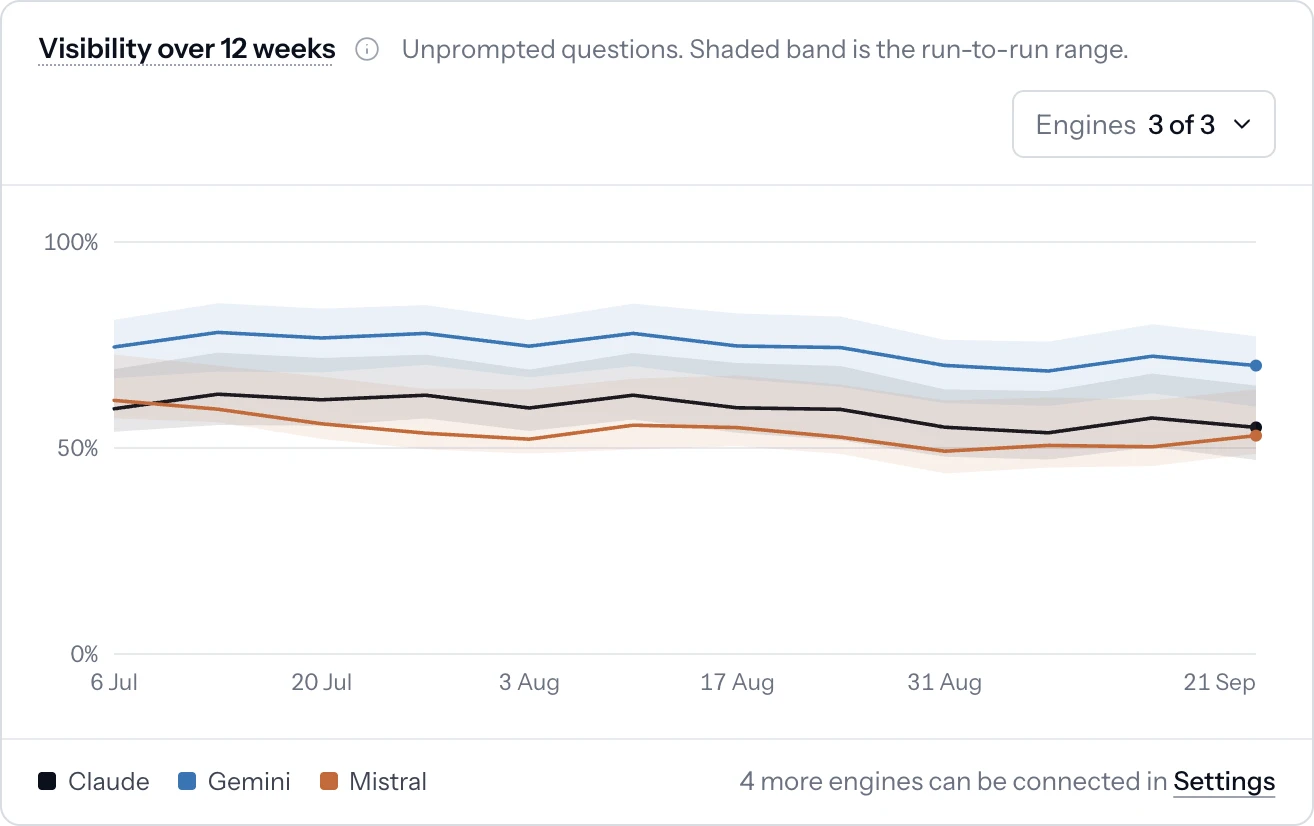
Every question, every engine, every run, in one table.
Questions are grouped by intent: discovery, capability, comparison, reputation, problem-led and constraint. For each one you see how many runs named you, per engine, and can open the answers as written.
- How many runs named you, per engine
- Add a question and run it now, or on the schedule
- Answers that cite your pages, and those that cite someone else
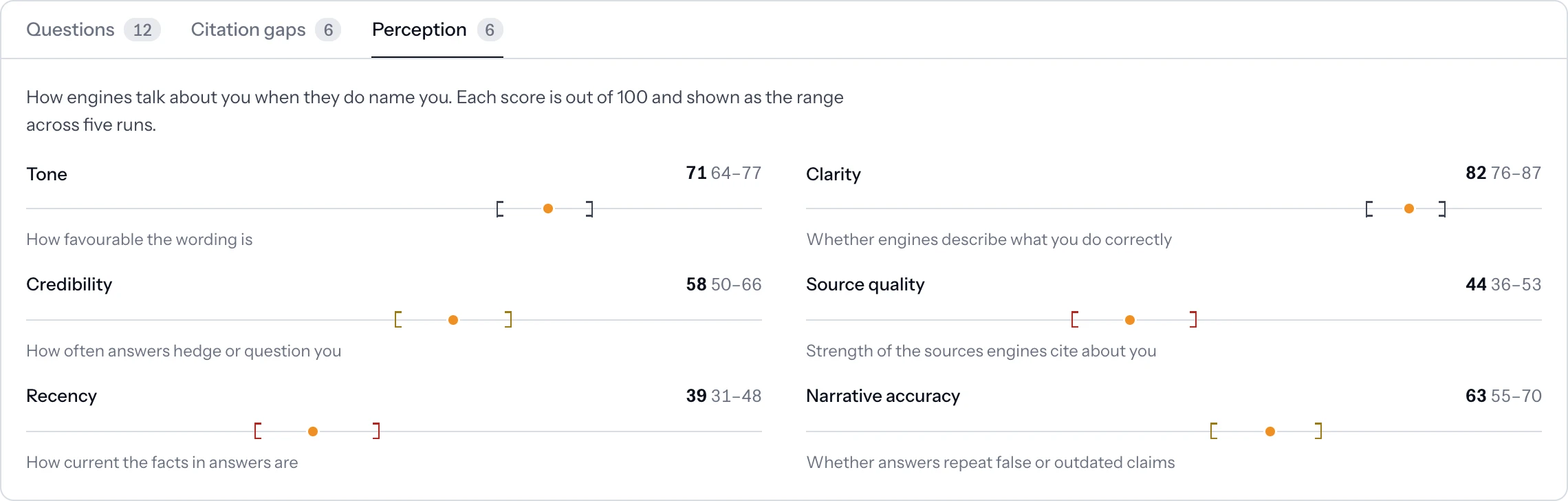
Not just whether you are named, but how.
Perception scores read the answers for tone, clarity, credibility, source quality, recency and narrative accuracy, so a mention that gets you wrong is not counted as a win.
- Six perception scores, each with its range
- The answers behind a low score, one click away
- Changes against the previous period
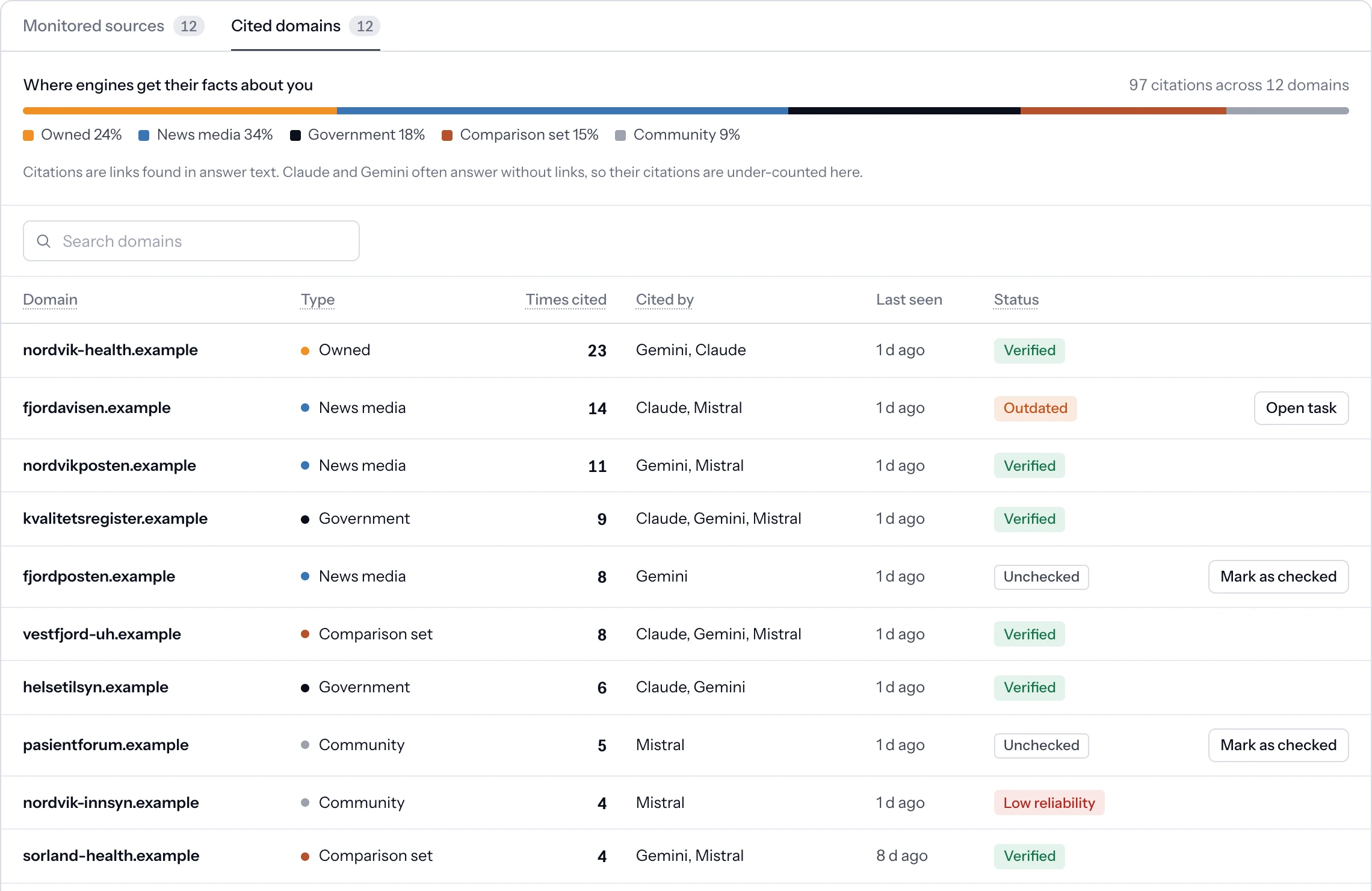
Where the engines get their facts about you.
Every domain the engines cited when answering about you, grouped by type and with a status, so you know which sources carry weight and which are outdated or unreliable.
- Owned, news media, government, comparison set and community domains
- A status on every domain: verified, unchecked, outdated or low reliability
- Monitored sources with their health, so a silent source never looks like a quiet day
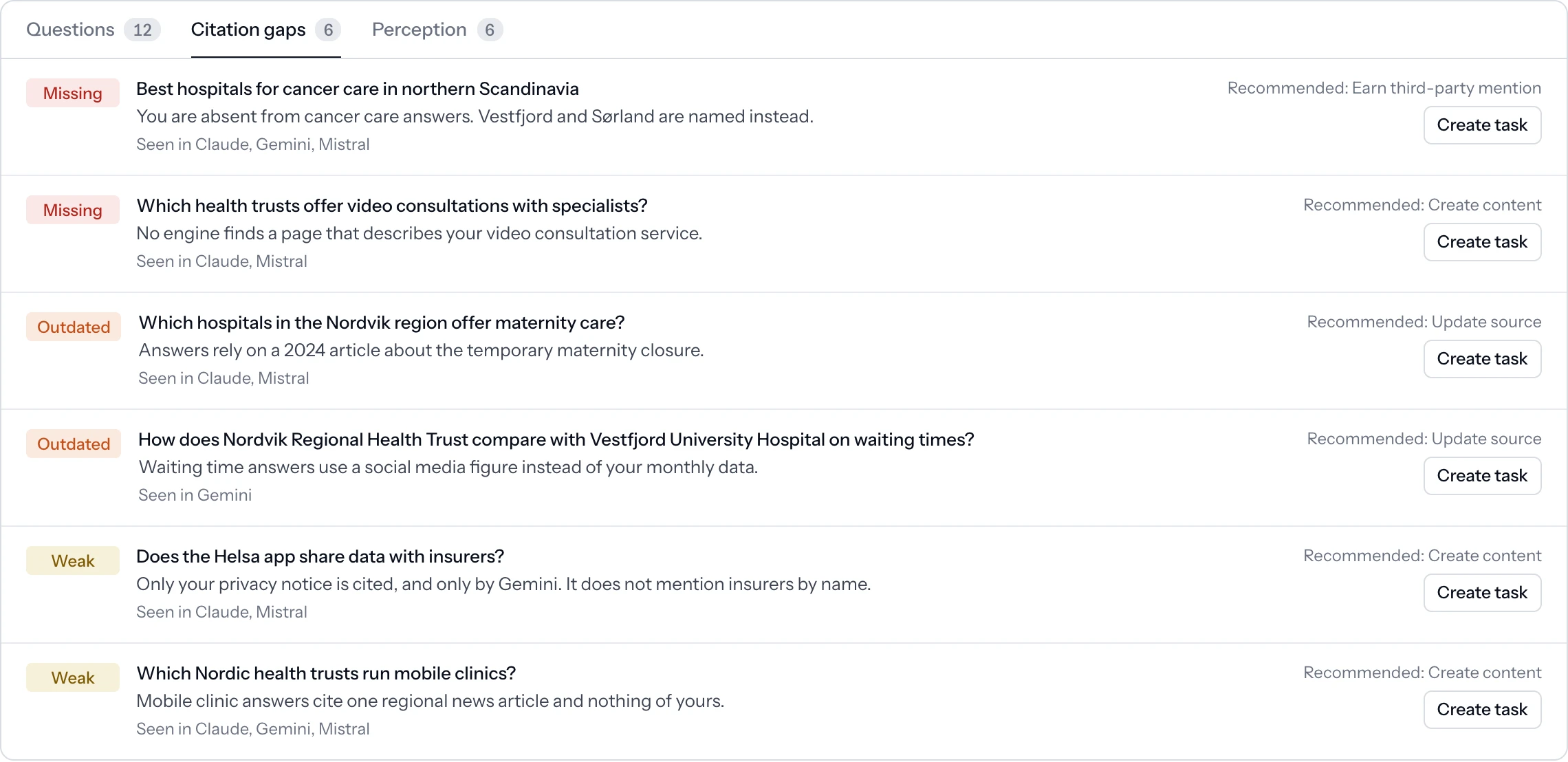
The questions where you are missing, and what would fix them.
Each gap is ranked missing, outdated or weak and comes with a recommended action: create content, update a source or earn a third-party mention. Approving it creates the task.
- Which engines showed the gap and what they cited instead
- A recommended fix for each gap, turned into a task on approval
- Open gaps carried into the weekly brief
See your share of AI answers on your own questions.
A working session against the questions your audiences actually ask, with real answers and sources.